A century ago,work broke the body
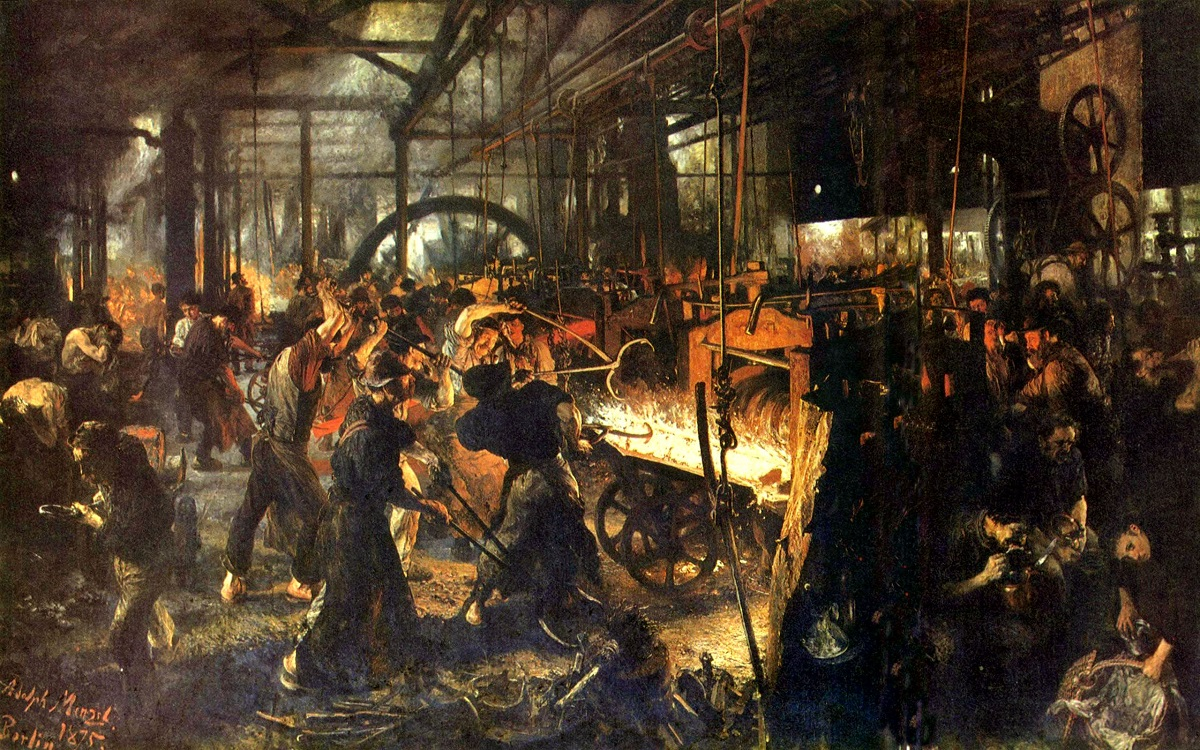
Today,it breaks the mind
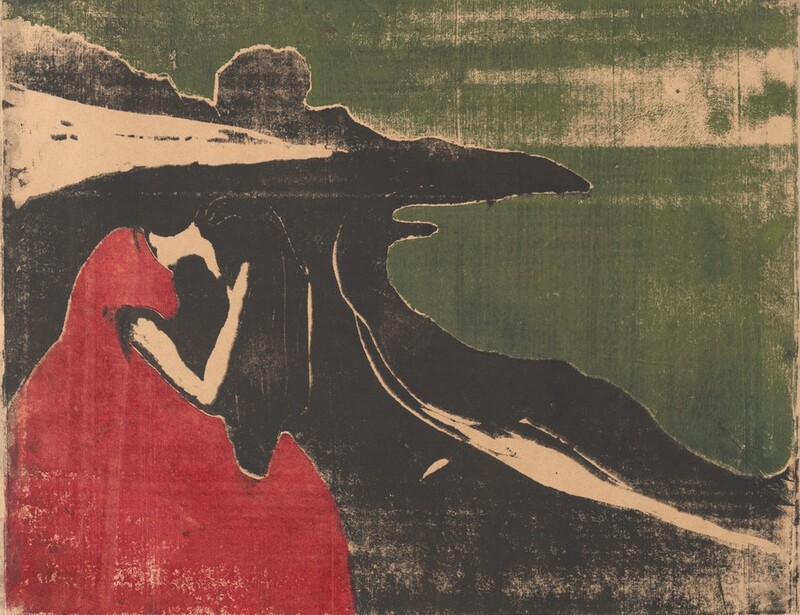
The Industrial Revolution mechanised labour and promised to hand us back our time. It handed us coordination instead, and the leisure it promised never came.
Scroll to exploreThe Industrial Revolution mechanised labour and promised to hand us back our time. It handed us coordination instead, and the leisure it promised never came.
Scroll to exploreSomewhere along the way the individual disappeared into the machinery. Each of us keeps one cog turning inside a mechanism nobody can see the edges of anymore. And we carry it home. It sits at the dinner table. It sleeps beside us in bed.
Think of an ordinary day and count what coordination alone took from you. Replanning a commute after a missed connection. Comparing a thousand offers for a holiday whose entire purpose was rest. Standing at a trailhead, working out a route. Each one small. Together they are the tax of living in a complex world, and it is paid in the only currency that is finite.
The tax compounds. Every year the systems around us grow more entangled, more interconnected and more interdependent. Every new connection claims another fragment of our attention. The overhead of simply existing now grows faster than any of us can absorb.
When it goes, the time comes back.
True self-determination and democracy only emerge when technology liberates us from administrative burdens, granting us the time and mental freedom to be human, to heal the Earth and to actively shape our society.
But none of that arrives by automating spreadsheets and inboxes. The work that actually binds us sits somewhere else.
For decades we optimised the movement of bits and changed almost nothing about the movement of atoms. We can send data across the planet in a fraction of a second and still need days to move the physical thing those bits ordered. Progress stalls at the edge of physical logistics. An app is only ever as fast as the truck that delivers what it sold.
Yet everything a life depends on was mined or grown, manufactured and moved. The real wealth of a society is measured by how safely, sustainably and productively it can shape its material world.
So the burden we need to hand over is the burden that carries a continent. The tonnes loaded and shipped. The millions of passengers carried. The power routed through grids. The fields harvested.
Which is why bits are now starting to move atoms. Over the coming years, intelligence lands on every machine that touches the physical world: on vehicles, cranes, plants, switches, charge points.
The machines carrying the real world are getting smarter, one at a time. It will take us nowhere. The reason is as old as humanity.
People cooperate because cooperation pays. Given a real choice between going alone and working together, most of us choose to work together — across countries, languages and incomes alike.[1] Groups solve problems faster and solve them more cleanly than individuals working against each other, and the gap widens as the problem grows more complex.[2]
No pyramid, no cathedral, no rocket, no aircraft, no piece of infrastructure was ever built by one person alone.
What carried us this far was never a single intelligence. It was that many of us knew about each other, and acted together.
The same law governs machines.
Everyone is building smarter machines and smarter models. Every individual device is getting better. One thing is missing, and without it those investments are wasted trillions.
A crane that lifts every container perfectly does not know which truck is loading next. A train that runs perfectly does not know the flight it has to meet. A charge point that charges perfectly does not know which vehicle has to be full at six in the morning.
Every part is clever. The whole is blind.
Every evening ten thousand phones move through a city. No single one of them knows anything about that city. Together they know where every traffic light stands in its cycle, where the roadworks are, which street a bin lorry is blocking right now. None of that knowledge sits in any device. It exists only in the connection between them, and it is enough to route a car around a delay it has not reached yet.
A supply chain never depended on one perfect truck, one perfect vessel, one perfect freight train. It depends on the harmony between them, on all those cogs meshing at the right moment. Those chains carry no intelligence today. They are carried by people, coordinating.
And even that person has no view of the whole. Judgement was never the weak point. Sight was. Put the most capable model on top of an operation that cannot see itself and nothing changes, which is why most automation projects show no measurable effect and only a fraction ever reach value-creating operation.[3]
Understand the present state of the physical world. Predict its next state. Steer it. Most operations never clear the first step.
What is missing is the connection: a layer running between the machines, between operators, across domains, holding one living shared picture of what is actually happening. Data infrastructure was built to answer questions about the operation. Now it has to run it. The information volumes involved exceed what any person can process in real time, so the algorithms carry the load, compute the best available action, set the projected consequence beside it, and leave the confirmation to the human.
Demand for food, materials, energy and movement grows every year. The people who move it are becoming fewer every year.
Every industrial nation is losing workers faster than any recruitment can replace them.[4] Industry names that shortage as the hardest brake on its own plans.[4] In agriculture the generation carrying the work is retiring with almost nobody stepping into its place.[5] There is no policy that reverses this.
Which leaves two roads. Load more onto people who already carry more than a person should. Or hand the work over — to machines that are clever, and to a layer that connects them into something that thinks.
There is no third option!
When the layer takes over, the friction of the physical world dissolves. Smart machines, joined by a smart system, begin to breathe and think like a living organism — an invisible collective nervous system binding them into a single intelligent whole. Energy and resources flow in real time, like blood through a body, to wherever they are needed most.
We will have autonomous vehicles that no longer simply follow routes. They move to the heartbeat of the city. A train runs four minutes late, and an impulse travels through the network; the robotaxi reserved for you glides to another passenger, while a new one is waiting as you step onto the platform.
We will have grids that sense what is coming. They feel the hour you will need your car and breathe in the cleanest energy in the cheapest window, so your battery fills, your bill falls, and the network runs perfectly balanced.
Ports turn their dangerously clogged arteries into flowing veins. A container is touched a single time and glides straight from the ship's crane onto the waiting train. In the hinterland, autonomous fleets never stand still for hours waiting on a delayed vessel as the moment a delay appears, the network redirects them to free freight. The supply chain grows more efficient and stays in permanent, fluid motion.
None of it demands a human hand, unless humanity wants it. It is the quiet breathing of a reality that stays one step ahead of time on an entirely ordinary Monday.
This is no utopian fantasy. Intelligence itself gets cheaper every year. When capability becomes a commodity, the true value lies in the invisible membrane that holds it all together.
No continent has built what Europe has built. A rail network three times denser than that of the United States or China, carrying 443 billion passenger-kilometres a year.[6] Ports, grids and corridors that move 450 million people and everything they consume.
All of it exists because people understood that prosperity needs a physical foundation. Walk through any major European station and you are looking at ambition rendered in stone and steel.
Which is why we feel the blindness here first, and feel it now. Revenue does not disappear through mistakes. It disappears through missing sight. Delay compensation is booked as a planned operating expense. Containers move four times because nobody knew their destination the first time. A third of European grid operators cannot see the live state of their own network, let alone anyone else's.[7][8]
And that same density is the prize. Nowhere else do so many operators, borders, modes and networks already touch one another. Every one of those touchpoints runs blind today, and every one of them is efficiency waiting to be claimed. A continent of separate systems gains something from sight. A continent this entangled gains orders of magnitude more. Gains that neither the United States nor China can reach for, because the network they would need was never laid.
The United States moves capital at software speed. China dominates replication at mass scale.[9] Between those two lies the high-precision integration of many parts into one working whole, and Europe never stopped being good at it. This is the continent that assembles aircraft from components made in five countries and flies them, that holds a shared grid steady across thirty borders, that built a machine twenty-seven kilometres long to a tolerance of millimetres. An intelligence layer over physical infrastructure is precisely that discipline: thousands of components, hundreds of operators, one coherent system, running live. We spent a century learning to do this in steel. Doing it in software is the same craft.
Europe has been told for a decade that its greatest century lies behind it. It is standing at the threshold of the one it was built for.
Most of Europe's digital infrastructure already comes from outside.[11] The layer where that infrastructure meets the physical world will not.
Whoever runs the layer that carries the rails, the grids and the ports decides when a continent moves.
It can go to platforms that steer the tracks and networks of half a billion people and answer, in the end, to a quarterly earnings report.
It can go to a state enterprise whose efficiency is real, whose surveillance is equally real, whose censorship is real, and whose reach into hard-won freedoms is real. Anyone who depends on it becomes a subject of that state in practice, whatever the contract says.
Or it answers to human dignity, to freedom, to democracy, to equality before the law. To the principle that a person decides their own life and a society decides its own affairs. It answers to the people who hold those values, regardless of where they start, regardless of origin or colour, religion or gender.
We reached into the depths of space, tore down walls, and won rights that had never been granted to anyone. None of it because it was easy.
The generation that did it is retiring now. It built rockets to secure Europe's independence in orbit. It laid one of the densest high-speed rail networks on earth. It invented the World Wide Web. It broke global monopolies by building an aircraft manufacturer from nothing. It built the largest machine humanity has ever assembled to explore the unknown.
What that generation had was not more money and not better technology. It asked whether a plan would work, never whether anyone was permitted to make one.
Demand grows, the people carrying it thin out, and the clock is running.
This layer gets built this decade, or Europe is exiled into irrelevance.
To the operators: nobody else has what you have. The densest network on earth runs through your control rooms, and every second of it generates data that the rest of the world would have to spend a decade collecting. It is sitting in systems that were never built to speak. Connect them, and you stop reacting to your own operation and start running it ahead of reality. The margin currently leaking out of your business through blindness comes back. The people who have run your network for thirty years get the sight to match their judgement.
Stop defending your position and start setting the terms.
There is no committee somewhere that will save this economy. No parliament legislates a layer into existence. Rockets, rail networks and the Web were built the same way anything gets built: by the people who knew how, and did it. If nobody builds this one, our industry drifts into dependency, and the values it carries drift with it.
Europe mislaid its courage. It did not lose it. Let's go and get it back.
If you have read this far, you already care how this ends. We want the people who will lift the burden of the old world off human minds, so that humanity can turn to what comes next.
Galith is building it. Come build it with us, and make sure the prosperity that follows answers to human dignity, to freedom, to the right of a person to decide their own life.